
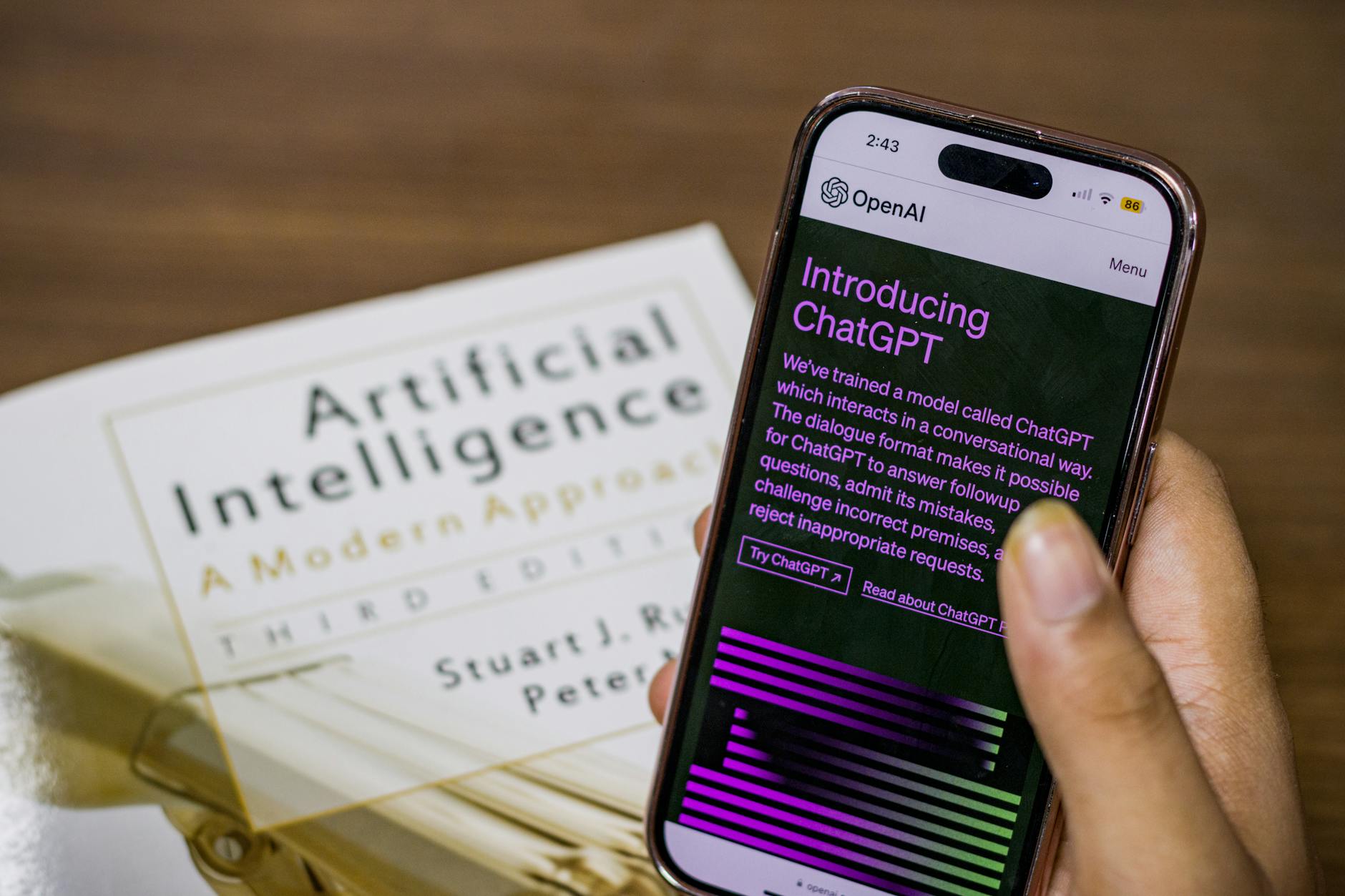
ChatGPT Review 2026: The Short Answer
ChatGPT remains one of the most capable and versatile AI chatbots available in 2026, but it's no longer the runaway leader it once was. With serious competition from Claude, Gemini, and a wave of specialized AI tools, ChatGPT's continued dominance depends heavily on which version you're using and what you actually need it to do.
This ChatGPT review breaks down everything you need to know — performance, pricing, real-world use cases, and honest limitations — so you can decide whether it's the right AI assistant for you in 2026.
What Is ChatGPT in 2026?
ChatGPT, developed by OpenAI, has evolved dramatically since its public debut. By 2026, it operates on OpenAI's most advanced models, with GPT-4o and successive iterations powering a multimodal experience that handles text, images, voice, file analysis, and real-time web browsing — all within a single interface.
The platform is available via web, mobile app, and API, with a free tier and a paid subscription (ChatGPT Plus) that unlocks priority access, advanced models, and expanded usage limits. An enterprise tier serves business users with additional privacy controls and admin features.
ChatGPT Performance: How Good Is It Really?
Language and Writing Quality
ChatGPT continues to excel at written language tasks. Whether you're drafting emails, writing long-form content, summarizing documents, or brainstorming ideas, the output quality is consistently strong. The model follows nuanced instructions well, adapts tone effectively, and handles complex prompts with a level of coherence most competitors still struggle to match.
For writers, marketers, and content creators, it remains one of the best AI chatbots for raw text generation and editing assistance.
Reasoning and Problem-Solving
OpenAI has made significant strides in reasoning capabilities. The "o" series models — designed specifically for multi-step logical thinking — are genuinely impressive for tasks like data analysis, coding, mathematics, and structured decision-making. If you're a developer or analyst, this is where ChatGPT in 2026 really earns its keep.
That said, it still makes confident-sounding errors occasionally — a phenomenon known as "hallucination." For high-stakes research, always verify outputs against primary sources.
Multimodal Capabilities
ChatGPT now handles images, audio, and documents natively. You can upload a PDF and ask it to summarize key points, paste in a chart and ask for interpretation, or use voice mode for a surprisingly natural back-and-forth conversation. These features have matured considerably and are genuinely useful rather than gimmicky.
Real-Time Web Access
The integrated browsing tool allows ChatGPT to pull current information from the web — a major upgrade from its early days of frozen training data. In practice, results are reliable for general queries but can still miss very recent or niche updates. It's a useful feature, not a replacement for dedicated research tools.
ChatGPT Pricing in 2026
- Free tier: Access to GPT-4o (with usage limits), standard features, and web browsing. Solid value for casual users.
- ChatGPT Plus (~$20/month): Higher usage caps, priority access during peak times, access to advanced reasoning models, image generation via DALL·E integration, and more.
- ChatGPT Pro (~$200/month): Designed for power users and professionals who need near-unlimited access to the most capable models.
- ChatGPT Enterprise: Custom pricing for organizations needing team management, enhanced data privacy, and API integrations.
The free tier is genuinely useful — not a crippled preview. But if you use AI tools daily for professional work, Plus pays for itself quickly.
Real-World Use Cases: Where ChatGPT Shines
Content Creation and Editing
Writers, bloggers, and marketing teams consistently rate ChatGPT as a top productivity tool. It can draft, restructure, proofread, and repurpose content at speed. The ability to set a custom tone or persona makes it flexible enough for brand-specific work.
Coding and Development
ChatGPT is a legitimate coding assistant. It writes, debugs, and explains code across most major programming languages. Developers use it to speed up repetitive tasks, generate boilerplate code, and troubleshoot errors. It's not a replacement for experienced engineers, but it's an exceptional productivity multiplier.
Learning and Research
Students and professionals use ChatGPT to break down complex topics, generate study guides, explain academic papers, and explore unfamiliar subjects. The conversational format makes it far more engaging than static documentation or textbooks.
Business Productivity
From drafting proposals to analyzing spreadsheets, creating meeting summaries, and building templates, ChatGPT handles a wide range of business tasks competently. Integration with tools like Microsoft 365 and various third-party apps via GPTs and plugins extends this further.
Honest Limitations You Should Know
- Hallucinations: ChatGPT can confidently state incorrect information. Always cross-check factual claims, especially for legal, medical, or financial topics.
- Usage limits: Even on Plus, heavy users can hit rate limits on the most advanced models during peak hours.
- Generic outputs without good prompts: The quality of what you get is directly tied to how well you prompt it. Vague inputs produce vague outputs.
- Memory limitations: While memory features have improved, long or complex ongoing projects can still lose context across sessions.
- Privacy considerations: By default, conversations may be used to improve OpenAI's models. Enterprise and API users get stronger data controls, but free and Plus users should avoid sharing sensitive personal or business information.
ChatGPT vs. the Competition in 2026
The AI chatbot market in 2026 is genuinely competitive. Here's how ChatGPT stacks up against its main rivals:
- vs. Claude (Anthropic): Claude often edges ahead on long-document analysis and nuanced, careful writing. It's also perceived as less prone to hallucination in direct comparisons. ChatGPT counters with a broader feature set and more integrations.
- vs. Gemini (Google): Gemini has the advantage of deep Google ecosystem integration (Docs, Drive, Gmail). ChatGPT is generally rated higher for standalone creative and coding tasks.
- vs. Copilot (Microsoft): Copilot is built on GPT technology and wins on Microsoft 365 integration. For general use outside the Microsoft ecosystem, ChatGPT is typically the stronger standalone product.
Bottom line on competition: No single AI chatbot is best at everything. ChatGPT's breadth of capability makes it the most versatile general-purpose option, but specialists and power users may find better results elsewhere for specific tasks.
Who Should Use ChatGPT in 2026?
ChatGPT is ideal for: Writers, developers, students, marketers, small business owners, and anyone who needs a capable, general-purpose AI assistant they can rely on daily.
You might prefer an alternative if: You need deep integration with Google Workspace (Gemini), you're primarily doing long-document legal or academic analysis (Claude), or you're building deeply customized enterprise workflows with specific compliance requirements.
Verdict: Is ChatGPT Still the Best AI Chatbot in 2026?
For most people, yes — but with an important asterisk. ChatGPT in 2026 is more powerful, more versatile, and more polished than ever. Its combination of writing quality, reasoning ability, multimodal features, and ecosystem integrations makes it the safest default recommendation for the widest range of users.
However, "best" is increasingly context-dependent. If you have a specialized workflow, it's worth testing Claude or Gemini alongside ChatGPT before committing to a subscription. The free tiers across all major platforms make this comparison easy enough to do yourself.
Our overall rating: 4.6 / 5 — exceptional general-purpose performance, held back only by hallucination risks and a competitive landscape that's closing the gap.
Frequently Asked Questions
Is ChatGPT free in 2026?
Yes, ChatGPT offers a free tier that includes access to GPT-4o with usage limits, web browsing, and core features. The free version is genuinely useful for casual and moderate use. A paid Plus plan (~$20/month) unlocks higher limits and advanced models for power users.
What is the best ChatGPT version to use in 2026?
For most users, GPT-4o delivers the best balance of speed and capability. For complex reasoning tasks — coding, mathematics, multi-step analysis — the "o-series" reasoning models available on Plus and Pro tiers are significantly stronger.
Is ChatGPT accurate and reliable?
ChatGPT is highly capable but not infallible. It can produce confident-sounding incorrect information (hallucinations), particularly on niche or rapidly changing topics. It's best treated as a powerful starting point, not a definitive source. Always verify important facts independently.
How does ChatGPT compare to Claude and Gemini in 2026?
ChatGPT leads on versatility and overall feature breadth. Claude is often preferred for careful, nuanced writing and long-document tasks. Gemini has the strongest integration with Google's productivity suite. All three are competitive — the best choice depends on your specific use case.
Is ChatGPT safe to use for business?
For general business use, ChatGPT is widely adopted and considered reliable. However, avoid entering sensitive client data, proprietary information, or confidential details into the free or Plus tiers, as data may be used for model training by default. ChatGPT Enterprise offers stronger data privacy controls suitable for regulated industries.
Does ChatGPT have memory in 2026?
Yes. ChatGPT now includes memory features that allow it to retain preferences, context, and information across conversations. Users can view, edit, or delete what it remembers. Memory has improved significantly but still has limitations for highly complex or long-running projects.