
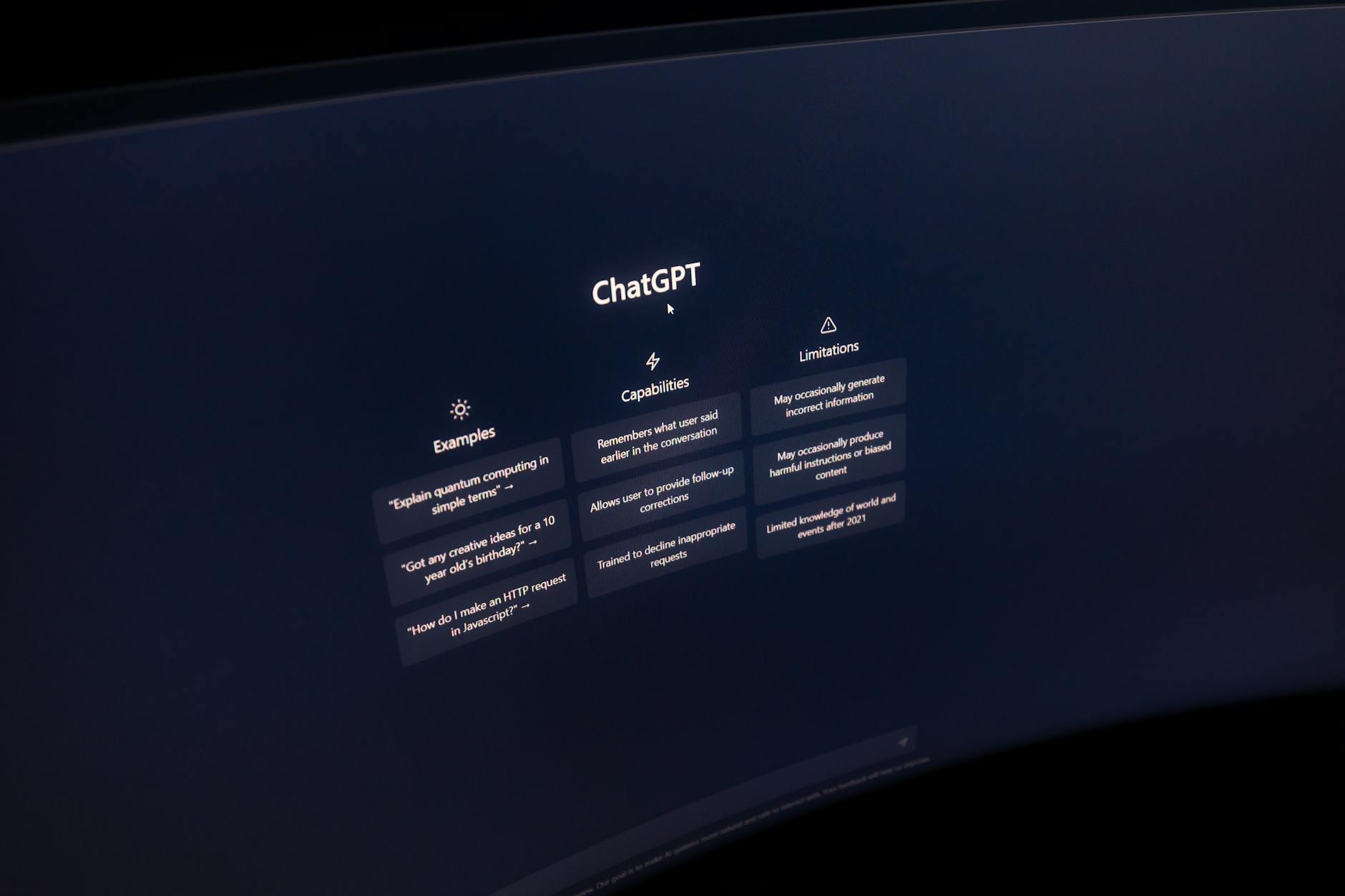
ChatGPT Review 2026: The Short Answer
ChatGPT remains one of the best AI chatbots available in 2026, but it's no longer the unchallenged leader it once was. With strong competition from Google Gemini, Anthropic's Claude, and others, OpenAI's flagship product still earns its place at the top — but the right choice increasingly depends on what you need it for.
In this ChatGPT review, we've tested the platform extensively across writing, coding, research, and everyday productivity tasks to give you an honest, up-to-date picture of where it excels, where it falls short, and who should actually be paying for it in 2026.
What Is ChatGPT in 2026?
ChatGPT is OpenAI's conversational AI assistant, powered by the GPT-4o model (and its successors) for free users, and offering access to the most advanced reasoning models for paid subscribers. Since its launch in late 2022, it has grown into a full productivity platform — not just a chatbot. You can now use it to browse the web, generate images, analyze files, write and run code, and integrate with third-party tools via a growing plugin and GPT ecosystem.
In 2026, the key tiers are:
- Free: Access to GPT-4o with usage limits, basic image generation, and memory features
- ChatGPT Plus ($20/month): Higher usage limits, access to advanced reasoning models (o-series), priority access during peak times, and enhanced file/image analysis
- ChatGPT Pro ($200/month): Unlimited access to the most powerful models including extended thinking and research-grade capabilities
- Team and Enterprise: Collaborative workspaces, admin controls, data privacy guarantees, and custom deployments
ChatGPT 2026 Performance: What We Actually Tested
Writing and Content Creation
This is where ChatGPT consistently shines. Whether you're drafting blog posts, polishing emails, rewriting paragraphs for clarity, or generating creative fiction, the quality of output is genuinely impressive. It handles tone shifts well, understands nuanced instructions, and can iterate quickly based on feedback.
For professional writers, the custom instructions and memory features are a game-changer — ChatGPT can remember your preferred style, your audience, and your recurring projects across sessions, making it feel less like a tool and more like a reliable collaborator.
Limitation: It can still produce generic, overly polished prose that sounds AI-written if you don't push it with specific prompts. Light editing remains essential for anything going to a public audience.
Research and Reasoning
The o-series reasoning models available to Plus and Pro users represent a significant leap in analytical depth. For tasks like breaking down complex arguments, summarizing research papers, comparing options, or working through multi-step logic problems, these models outperform standard GPT-4o noticeably.
ChatGPT's web browsing feature allows it to pull in real-time information, which largely solves the outdated knowledge problem that plagued earlier versions. That said, it still occasionally misattributes sources or presents confident-sounding information that requires verification.
Limitation: For deep, citation-heavy academic research, tools like Perplexity AI or Claude with its larger context window may still be better suited depending on your workflow.
Coding Assistance
ChatGPT is an excellent coding companion. It can write, debug, explain, and refactor code across most major programming languages. The code interpreter (Advanced Data Analysis) feature lets it actually run Python in a sandbox environment — useful for data analysis, visualization, and quick scripting tasks.
For developers, the integration with platforms like GitHub Copilot and the ability to upload entire files for review makes it a genuinely practical tool rather than just a neat demo.
Limitation: For very large codebases or extended coding sessions, the context window can still become a constraint, and it sometimes introduces subtle bugs that require careful review.
Image Generation
ChatGPT's built-in image generation (powered by DALL-E and subsequent models) has improved substantially. You can generate clean, professional images directly in the chat interface, edit them with text prompts, and use them in documents or presentations without leaving the platform.
Limitation: If image generation is your primary use case, dedicated tools like Midjourney or Adobe Firefly still offer more control, style consistency, and output quality for professional creative work.
ChatGPT 2026: Pros and Cons
Pros
- Versatility: No other single AI tool covers as many use cases as effectively
- Refined memory and personalization: Long-term context makes repeated use genuinely more efficient
- Strong reasoning models: The o-series models handle complex, multi-step tasks at a high level
- Ecosystem and integrations: Wide third-party compatibility and a growing library of custom GPTs
- Consistent improvement: OpenAI ships updates frequently; the product in 2026 is meaningfully better than just a year ago
- Accessible free tier: The free version remains genuinely useful for casual and light professional use
Cons
- Price jump to Pro is steep: $200/month is difficult to justify for most individual users
- Still hallucinates: Confidently wrong answers remain a real risk, especially outside browsing mode
- Competition has closed the gap: Claude 3.5+ and Gemini Ultra are competitive or superior in specific domains
- Privacy concerns for sensitive work: Despite improvements, enterprise users should review data handling policies carefully
- Generic output without strong prompting: The quality ceiling requires skilled prompt engineering to reach
Who Should Use ChatGPT in 2026?
ChatGPT is the best AI chatbot for users who need a versatile, all-in-one AI assistant without wanting to juggle multiple specialized tools. It's particularly well-suited for:
- Content creators and writers who need a fast, responsive drafting and editing partner
- Developers and technical users who benefit from integrated code execution and debugging
- Business professionals managing a mix of writing, research, and productivity tasks daily
- Students and researchers looking for a capable reasoning assistant (with appropriate verification habits)
- Teams that benefit from shared workspaces, custom GPTs, and enterprise-grade privacy controls
If you're a power user focused exclusively on long-form writing and nuanced conversation, Claude may edge it out. If real-time information and deep Google ecosystem integration matters most, Gemini deserves serious consideration. But for most people doing most things? ChatGPT 2026 is still the smart default.
ChatGPT vs. Competitors in 2026
Here's a quick honest comparison for context:
- ChatGPT vs. Claude (Anthropic): Claude edges ahead on long-document analysis and nuanced creative writing. ChatGPT wins on tool integrations and broader versatility.
- ChatGPT vs. Gemini (Google): Gemini excels with Google Workspace integration and real-time search grounding. ChatGPT has a stronger plugin ecosystem and more refined conversational flow.
- ChatGPT vs. Copilot (Microsoft): Copilot is better for Microsoft 365 power users. ChatGPT wins as a standalone general-purpose assistant.
Frequently Asked Questions
Is ChatGPT free in 2026?
Yes. ChatGPT still offers a free tier in 2026 that provides access to GPT-4o with usage limits, basic image generation, and memory features. It's one of the most capable free AI tools available, though heavy users will hit rate limits and benefit from upgrading to Plus.
Is ChatGPT still the best AI chatbot in 2026?
For most general use cases, yes — ChatGPT is still one of the best AI chatbots in 2026. However, Claude and Gemini are now genuinely competitive in specific areas like long-context document work and Google ecosystem integration. The "best" tool depends on your primary use case.
What's the difference between ChatGPT Plus and ChatGPT Pro?
ChatGPT Plus ($20/month) gives you higher usage limits and access to advanced reasoning models. ChatGPT Pro ($200/month) offers essentially unlimited access to the most powerful models, including extended thinking modes designed for complex research and analysis tasks. Pro is primarily for power users and professionals with intensive daily AI workloads.
Does ChatGPT have a knowledge cutoff in 2026?
ChatGPT's base models still have a training data cutoff, but the web browsing feature (available on free and paid tiers) allows it to access real-time information from the internet. For most practical purposes, this resolves the outdated knowledge limitation — though you should still verify important facts independently.
Is ChatGPT safe to use for sensitive business information?
For individual and Plus users, conversations may be used to improve OpenAI's models unless you opt out in settings. For sensitive business use, the Team and Enterprise tiers offer stronger data privacy protections and the option to ensure your data isn't used for training. Always review OpenAI's current data usage policies before sharing confidential information.
How does ChatGPT 2026 handle hallucinations?
Hallucinations — where the AI generates plausible-sounding but incorrect information — remain an issue across all major AI models in 2026, including ChatGPT. The reasoning models and web browsing features reduce the risk significantly for factual queries, but you should always verify critical information from primary sources, especially for medical, legal, or financial topics.
Verdict: Is ChatGPT Worth It in 2026?
After extensive testing, our honest ChatGPT review conclusion is this: ChatGPT in 2026 is still the most well-rounded AI assistant on the market, and for most users — from students to senior professionals — it remains the best starting point and the hardest to replace entirely.
The free tier delivers real value. The Plus plan at $20/month is easy to justify for anyone using it regularly. The Pro plan is excellent but expensive enough that you should be clear about needing it before committing.
Bottom Line: ChatGPT 2026 earns a strong recommendation — not because it wins every category against every competitor, but because no other single tool matches its combination of capability, versatility, and usability across the widest range of tasks. If you're only going to use one AI assistant, this is still the one to beat.