
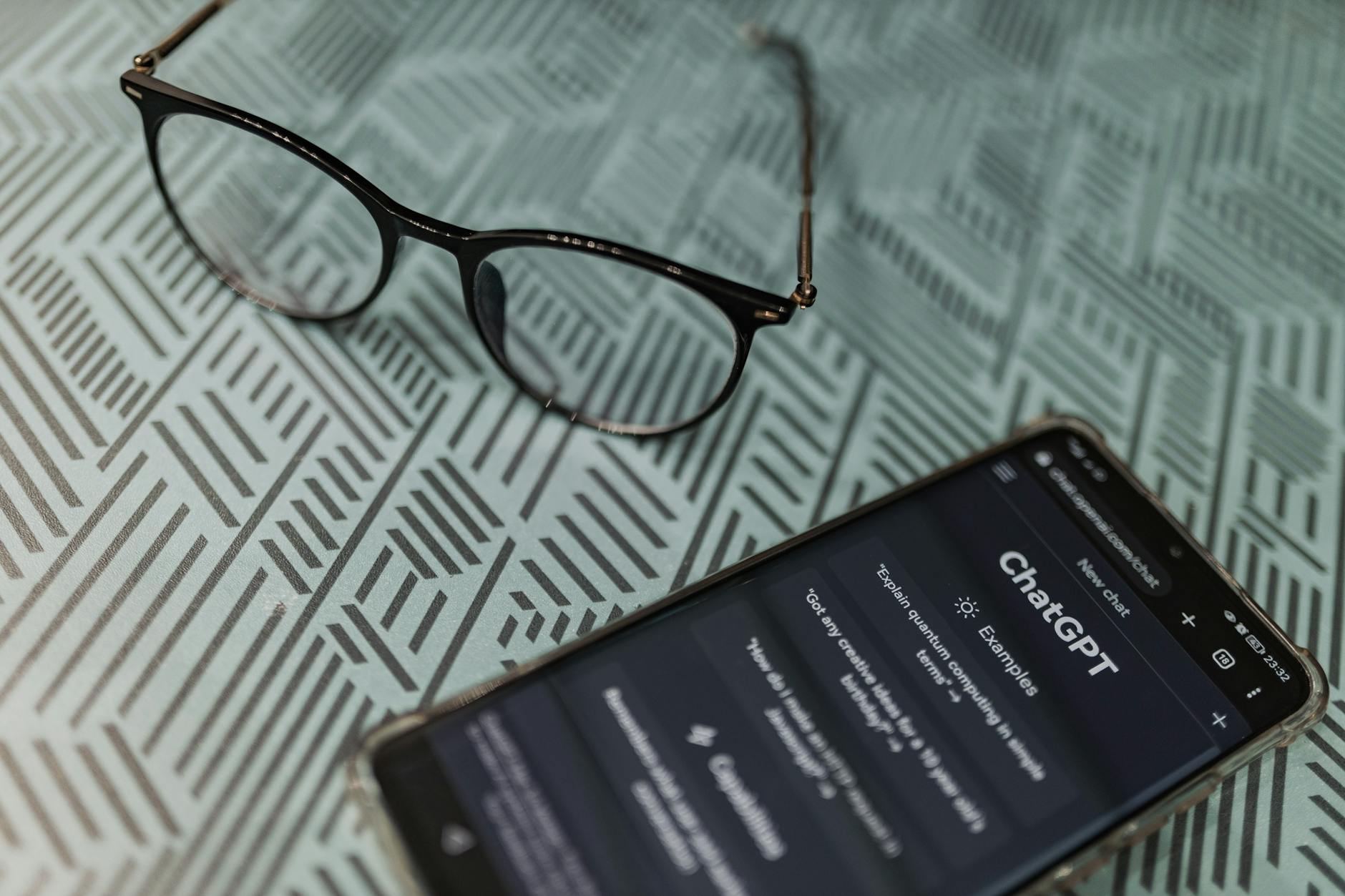
ChatGPT Review 2026: The Quick Verdict
ChatGPT remains one of the most capable and versatile AI chatbots available in 2026, but it's no longer the unchallenged leader it once was. Competitors like Google Gemini, Anthropic's Claude, and Meta's Llama-based tools have closed the gap significantly — meaning your choice now depends heavily on your specific use case rather than defaulting to ChatGPT out of habit.
That said, for most everyday users, writers, developers, and business professionals, ChatGPT still delivers an exceptional experience with a depth of features that few rivals can match end-to-end. Here's everything you need to know.
What Is ChatGPT in 2026?
ChatGPT is OpenAI's flagship conversational AI platform, built on the GPT-4o model family (with access to newer reasoning models like o3 for paid subscribers). Since its explosive debut in late 2022, it has evolved from a simple chat interface into a full-featured AI workspace that can browse the web, generate images, analyze files, run code, and integrate with dozens of third-party tools via plugins and the GPT Store.
In 2026, ChatGPT is available as a web app, mobile app (iOS and Android), and via API. OpenAI has also deepened its enterprise offerings, making ChatGPT a serious contender for organizational deployments — not just individual productivity hacks.
ChatGPT 2026 Plans and Pricing
OpenAI offers several tiers to suit different needs and budgets:
- Free Plan: Access to GPT-4o (with usage limits), basic browsing, and image generation. Genuinely useful, but throttled during peak hours.
- ChatGPT Plus ($20/month): Priority access, higher message limits, full access to advanced reasoning models (o3), DALL·E image generation, file uploads, and Advanced Data Analysis.
- ChatGPT Team ($30/user/month): Everything in Plus, shared workspaces, admin controls, and higher context windows for collaborative use.
- ChatGPT Enterprise (custom pricing): Maximum context length, enterprise-grade security, SSO, no data training on your inputs, and dedicated support.
The free tier is genuinely competitive in 2026 — OpenAI has expanded its capabilities considerably. However, power users will feel the ceiling quickly without a paid plan.
Key Features in 2026
Advanced Reasoning with o3 Models
For Plus subscribers, OpenAI's o3 reasoning model is a standout feature. It takes longer to respond but tackles complex multi-step logic, mathematical proofs, coding challenges, and research tasks with noticeably higher accuracy than standard GPT-4o. It's not always necessary — but when you need it, it's remarkable.
Real-Time Web Browsing
ChatGPT can now browse the web in real time, pulling in current news, prices, research, and documentation. The integration is smoother than ever in 2026, though it occasionally retrieves outdated cached pages. Always verify time-sensitive information independently.
Multimodal Capabilities
You can feed ChatGPT images, PDFs, spreadsheets, audio files, and even video clips (on supported plans). The image analysis is particularly strong — useful for everything from reading charts to describing product photos for e-commerce copy.
Custom GPTs and the GPT Store
One of ChatGPT's most underrated features is the ability to create and use Custom GPTs — tailored versions of the chatbot with specific instructions, knowledge bases, and tool access. The GPT Store hosts thousands of community-built assistants for writing, coding, SEO, customer service, and more.
Memory and Personalization
ChatGPT's persistent memory feature has matured significantly. It can now remember your preferences, writing style, recurring projects, and context across conversations — making it feel less like starting from scratch every session and more like working with a knowledgeable assistant who actually knows you.
Real-World Use Cases
Where does ChatGPT actually shine in day-to-day use? Here are the strongest applications:
- Content Writing and Editing: Drafting blog posts, rewriting for tone, SEO optimization, and proofreading remain among ChatGPT's strongest suits.
- Coding Assistance: Debugging, explaining code, writing boilerplate, and even reviewing pull requests — developers consistently rate ChatGPT as a top tool.
- Research Summaries: Condensing long documents, academic papers, or reports into digestible briefs with citations.
- Data Analysis: Upload a CSV or spreadsheet and ask it to find patterns, generate charts, or write formulas.
- Customer-Facing Automation: Building knowledge-base bots via Custom GPTs for support teams.
Honest Pros and Cons
Pros
- Versatile and well-rounded — handles writing, code, analysis, and conversation better than almost any single competitor
- Continuously updated — OpenAI ships improvements regularly; the 2026 version is substantially better than even 2024's release
- Huge ecosystem — plugins, APIs, custom GPTs, and integrations with tools like Zapier, Notion, and Slack
- Strong free tier — genuinely useful without spending a cent
- Memory and personalization — reduces repetitive context-setting across sessions
Cons
- Still hallucinates — ChatGPT can confidently produce incorrect facts, especially on niche or recent topics. Always fact-check critical outputs.
- Plus plan feels rate-limited for heavy users — hitting message caps mid-workflow is genuinely frustrating
- Not always the best specialist — Claude 3.5 often outperforms on long-document analysis; Gemini has an edge on Google Workspace integration
- Privacy concerns for enterprise — while Enterprise plans exclude data from training, free and Plus users should be cautious with sensitive information
- Cost adds up for teams — at $30/user/month for Team plans, larger organizations should run a careful cost-benefit analysis
How ChatGPT Compares to the Competition in 2026
The best AI chatbot crown is genuinely contested in 2026. Here's a quick honest comparison:
- vs. Claude (Anthropic): Claude 3.5 Sonnet edges out ChatGPT on long-context document analysis and tends to be more cautious and nuanced in sensitive discussions. ChatGPT wins on ecosystem and tool integration.
- vs. Google Gemini: Gemini Ultra has a clear advantage for users deeply embedded in Google Workspace. ChatGPT is more capable for standalone, cross-platform workflows.
- vs. Copilot (Microsoft): Copilot is compelling for Microsoft 365 users. Outside that ecosystem, ChatGPT is the stronger, more flexible choice.
Bottom line on competition: ChatGPT is still the best all-rounder for most people, but "best" is context-dependent in 2026. No single chatbot dominates every category.
Who Should Use ChatGPT in 2026?
ChatGPT is the right choice if you:
- Need a versatile assistant that handles a wide range of tasks without switching tools
- Value a large, mature ecosystem of integrations and custom GPTs
- Are a writer, marketer, developer, or analyst looking for a daily productivity boost
- Want a strong free tier before committing to a subscription
You might look elsewhere if you have a very specific, specialized workflow — a dedicated coding assistant like Cursor, or a research-focused tool like Perplexity, may serve narrow use cases better.
Verdict
After extensive hands-on testing, our ChatGPT review 2026 conclusion is clear: it remains the most well-rounded AI chatbot on the market, and the GPT-4o plus o3 combination gives it real depth that casual and power users alike can appreciate. The free plan is more generous than ever, and Plus at $20/month still represents solid value for anyone using it regularly.
It's not flawless — hallucinations, rate limits, and privacy considerations are real issues you shouldn't ignore. But as a general-purpose AI assistant, nothing else covers the same breadth with the same level of polish. For most users in 2026, ChatGPT is still the benchmark everything else is measured against.
Rating: 4.5 / 5
Frequently Asked Questions (FAQ)
Is ChatGPT still the best AI chatbot in 2026?
ChatGPT remains the best all-around AI chatbot in 2026 for most users, thanks to its versatility, ecosystem, and continuous improvements. However, Claude and Gemini outperform it in specific niches like long-document analysis and Google Workspace integration respectively.
Is ChatGPT free in 2026?
Yes. ChatGPT offers a genuinely capable free plan with access to GPT-4o, basic web browsing, and image generation. Usage is throttled during peak hours, and advanced features like o3 reasoning models require a paid Plus subscription ($20/month).
Does ChatGPT still make things up (hallucinate)?
Yes, hallucination remains a known limitation in 2026. ChatGPT can produce confident but incorrect statements, particularly on niche topics or recent events. Always verify important facts, especially for professional or academic use.
What is the difference between ChatGPT-4o and o3?
GPT-4o is OpenAI's fast, multimodal default model — great for most everyday tasks. The o3 model is a reasoning-focused model that takes longer to respond but excels at complex logic, math, and multi-step problem solving. o3 is available to Plus subscribers and above.
Is ChatGPT safe for business use?
For sensitive business use, the ChatGPT Enterprise plan is recommended, as it excludes your data from model training and includes enterprise-grade security. Free and Plus users should avoid inputting confidential or proprietary information, as standard plans may use conversations to improve OpenAI's models.
How does ChatGPT compare to Claude in 2026?
Both are top-tier options. Claude 3.5 tends to be stronger for long-document summarization and nuanced writing tone. ChatGPT has a larger ecosystem, better tool integrations, and is more versatile across mixed workflows. Many power users subscribe to both.